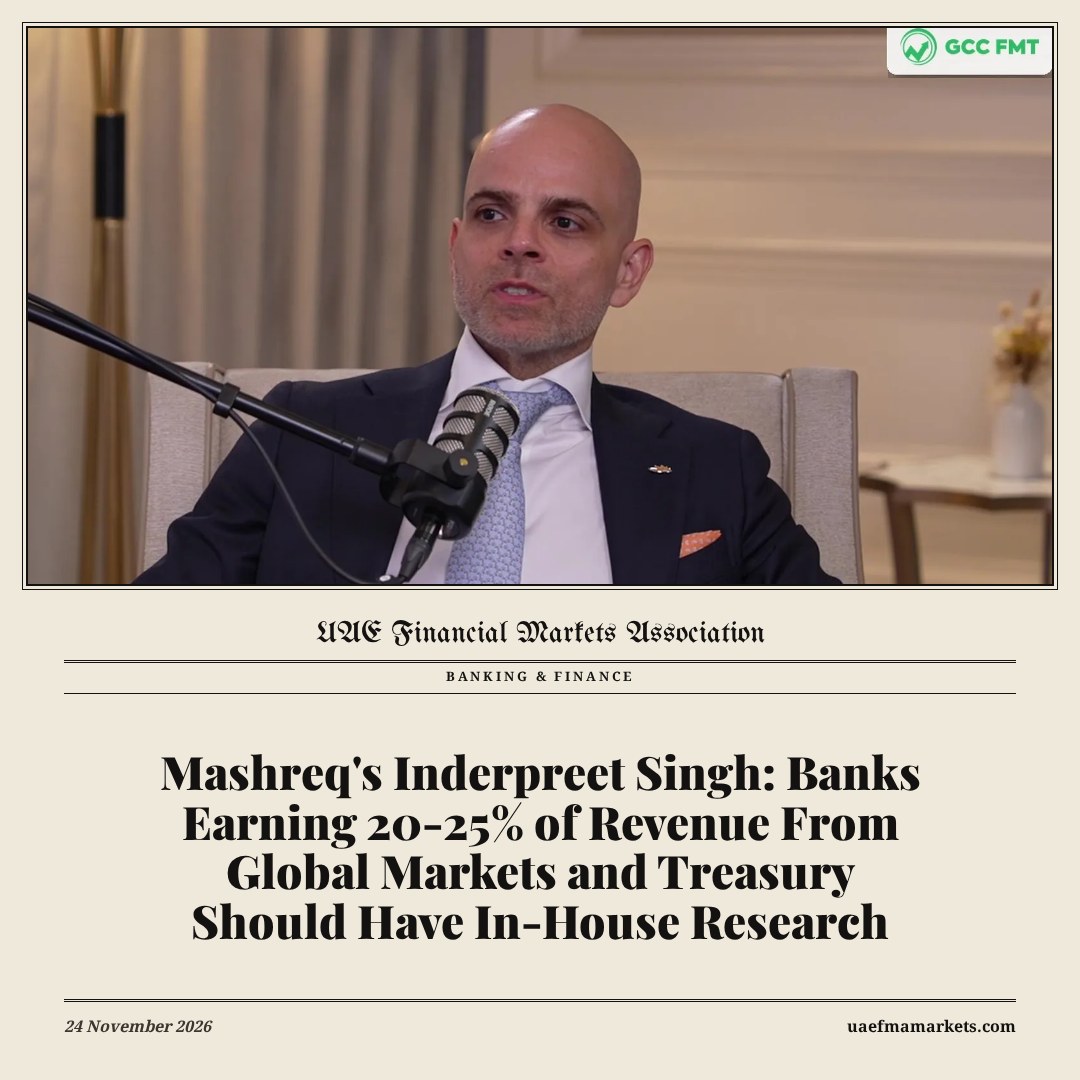
Mashreq's Inderpreet Singh: Banks Earning 20-25% of Revenue From Global Markets and Treasury Should Have In-House Research
On the UAEFMA Podcast, Mashreq's Inderpreet Singh explained how research sets the tone of a treasury desk's day, why a coherent house view matters, and why AI cannot replace the human touchpoint with clients.
 By UAEFMA Editorial Team
Dubai, November 24, 2026 2 min read
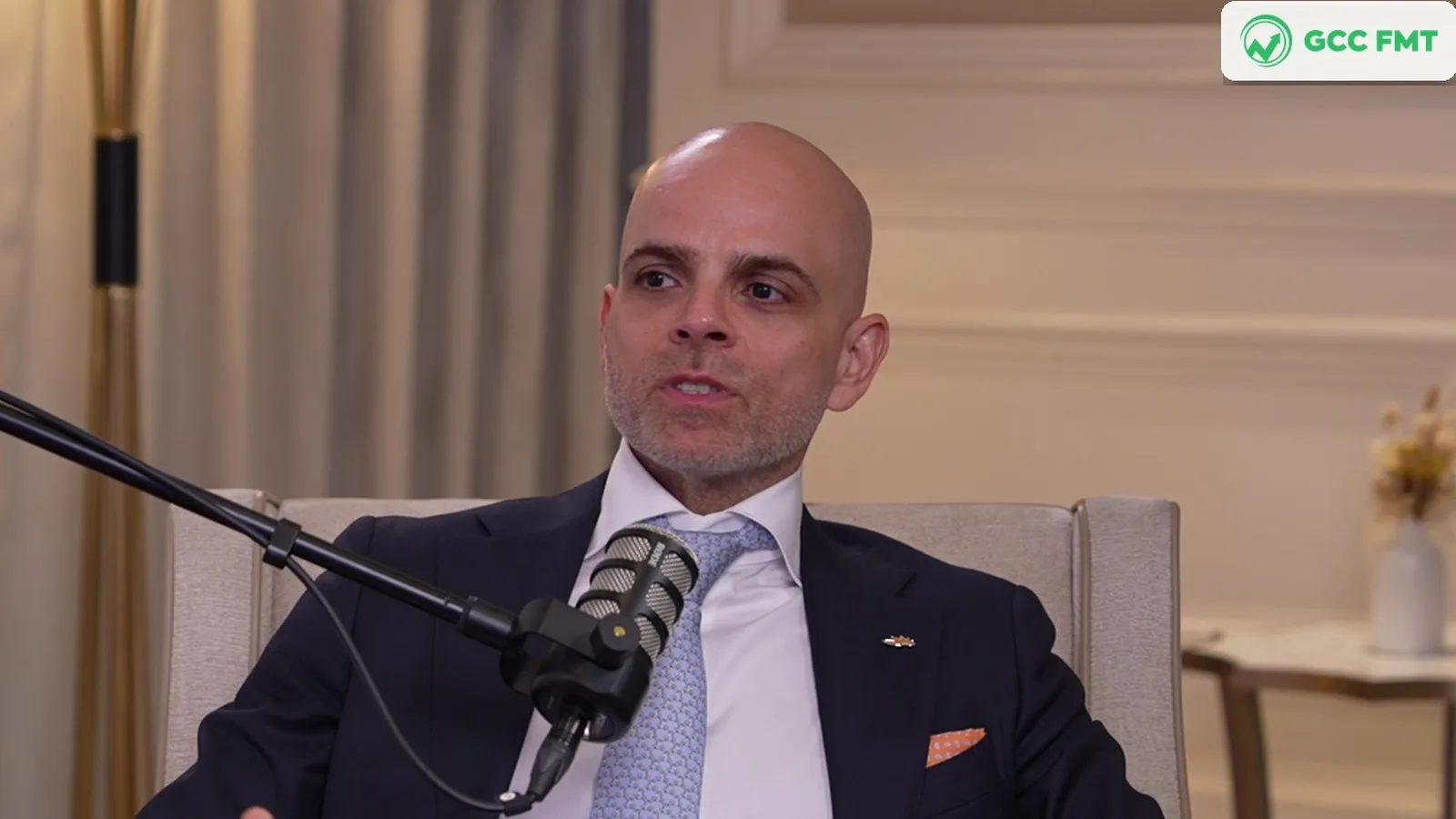
Any bank where global markets and treasury contribute more than 20 to 25% of the top line "should have, definitely have" an in-house research and strategy function, Inderpreet Singh, Global Head of Sales, Treasury and Global Markets at Mashreq, said on the UAEFMA Podcast, recorded at the 6th GCC Financial Markets and Treasury Conference (GCC FMT 2026) in Dubai.
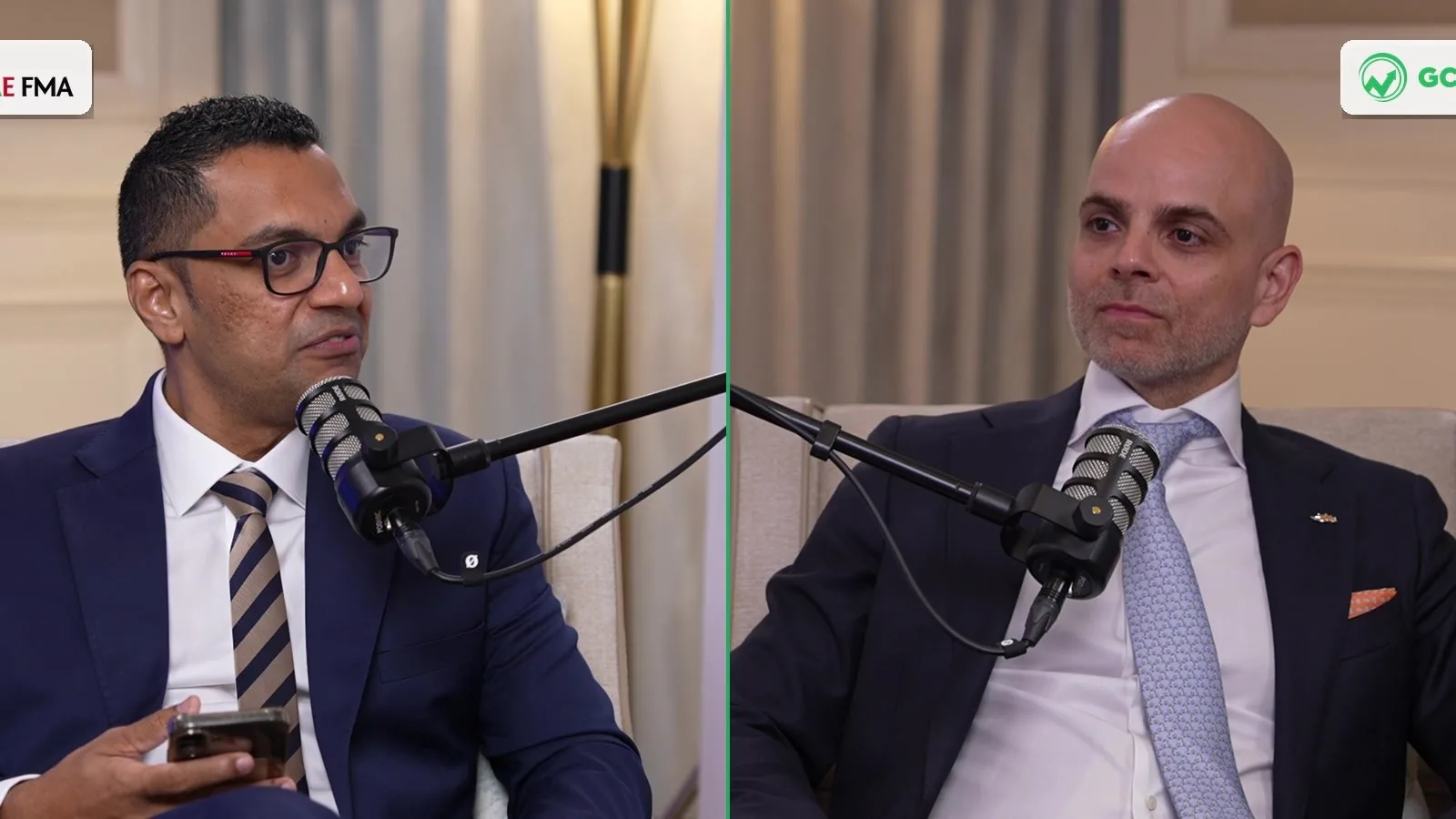
Singh spoke with Ajith Henry, who had moderated their panel on the role of global markets research.
How research sets the day
Singh described a typical morning at a large bank's treasury. Economists open with an overview of what happened overnight, strategists add the asset classes to express that view, traders share themes and flows, and sales adds what clients are asking. "It sets the tone for the day," he said, giving salespeople something to say "when you pick up the phone."

"A research and strategy team is like a risk management function. You cannot trace a trade back to the function, but you miss it when it is not there," he said. "The clients don't remember the last trade or the price that you gave. The clients remember the last good call that you made."
In smaller treasuries that mostly provide basic, reactive services, he said, banks find it harder to justify the cost, but "as these treasuries grow along with the size of the bank," they will increasingly build research.
One house view
When four bankers give a client four different views, Singh said, "it does not lend any credibility to the organisation." Without an institutional view, a bank risks becoming simply a price maker. "With price being commoditised, and everybody playing on the same level playing field, it is this that differentiates you," he said.
On AI, he said it can crunch historical numbers and produce forecasts, "but you can't take this report to your board and say, 'Trust this, I have it right.' You need a human touchpoint," especially in new situations with no historical data.
UAEFMA Editorial Team
The newsroom of UAEFMA Markets, the news service of the UAE Financial Markets Association, covering UAE banking, treasury, capital markets and fintech.