Ahmed Refaie's Tokenization Panel: "Even the Banknote in Our Pockets Is a Token", and Blockchain Is Just the Database
Closing GCC FMT 2026's digital assets and tokenization panel, fintech specialist Ahmed Refaie argued that tokenization is a migration of financial markets to a new ledger, not a new market, and that end users care about results, not jargon.
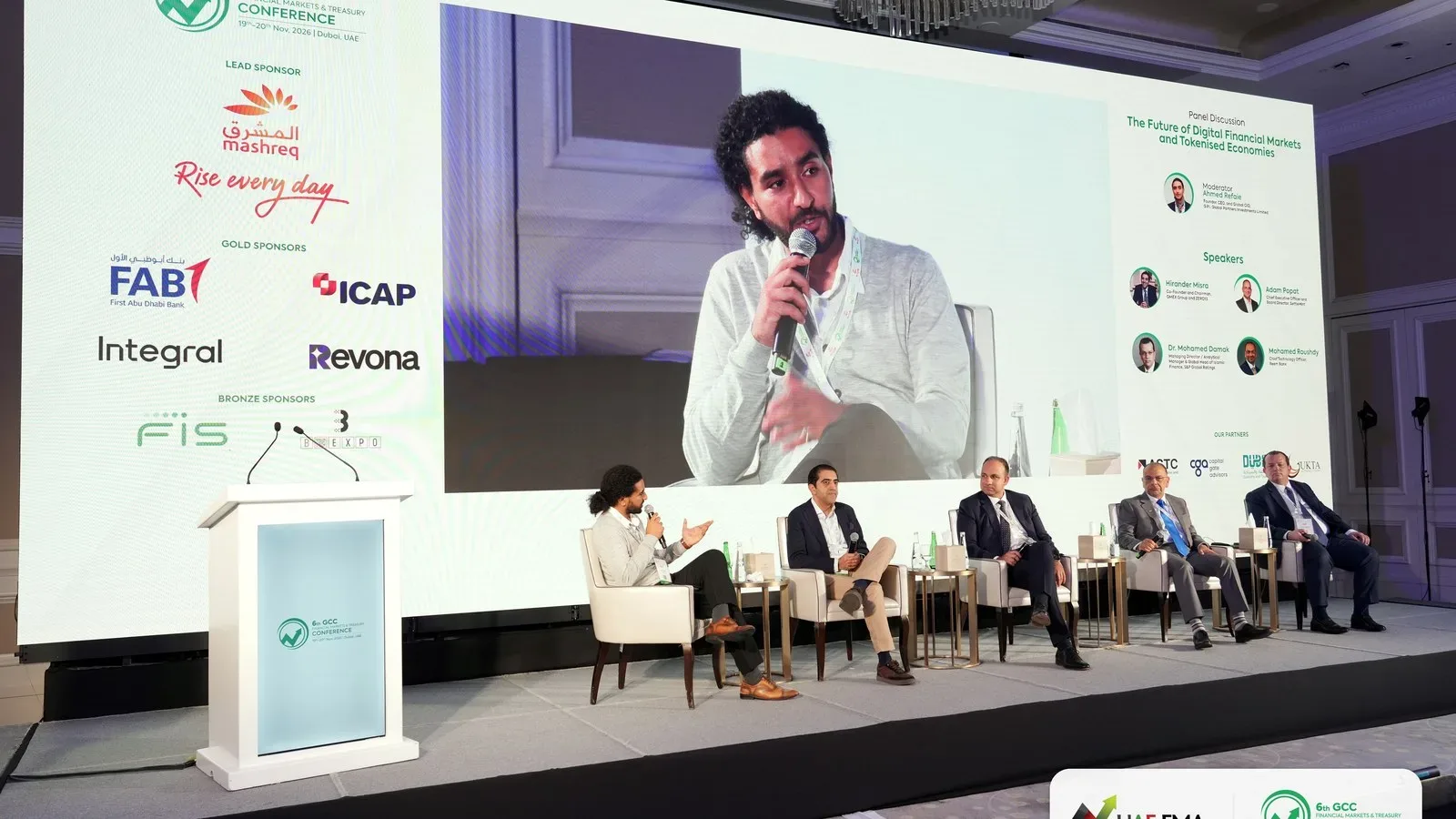
Ahmed Refaie closed the 6th GCC Financial Markets and Treasury Conference (GCC FMT 2026) programme in Dubai with the panel "Digital Assets and Tokenization: Shaping the Future of Financial Markets", a subject he called "a very sweet spot for me personally", after nine years in tokenization, Web3 and blockchain and a background on the financial buy side.
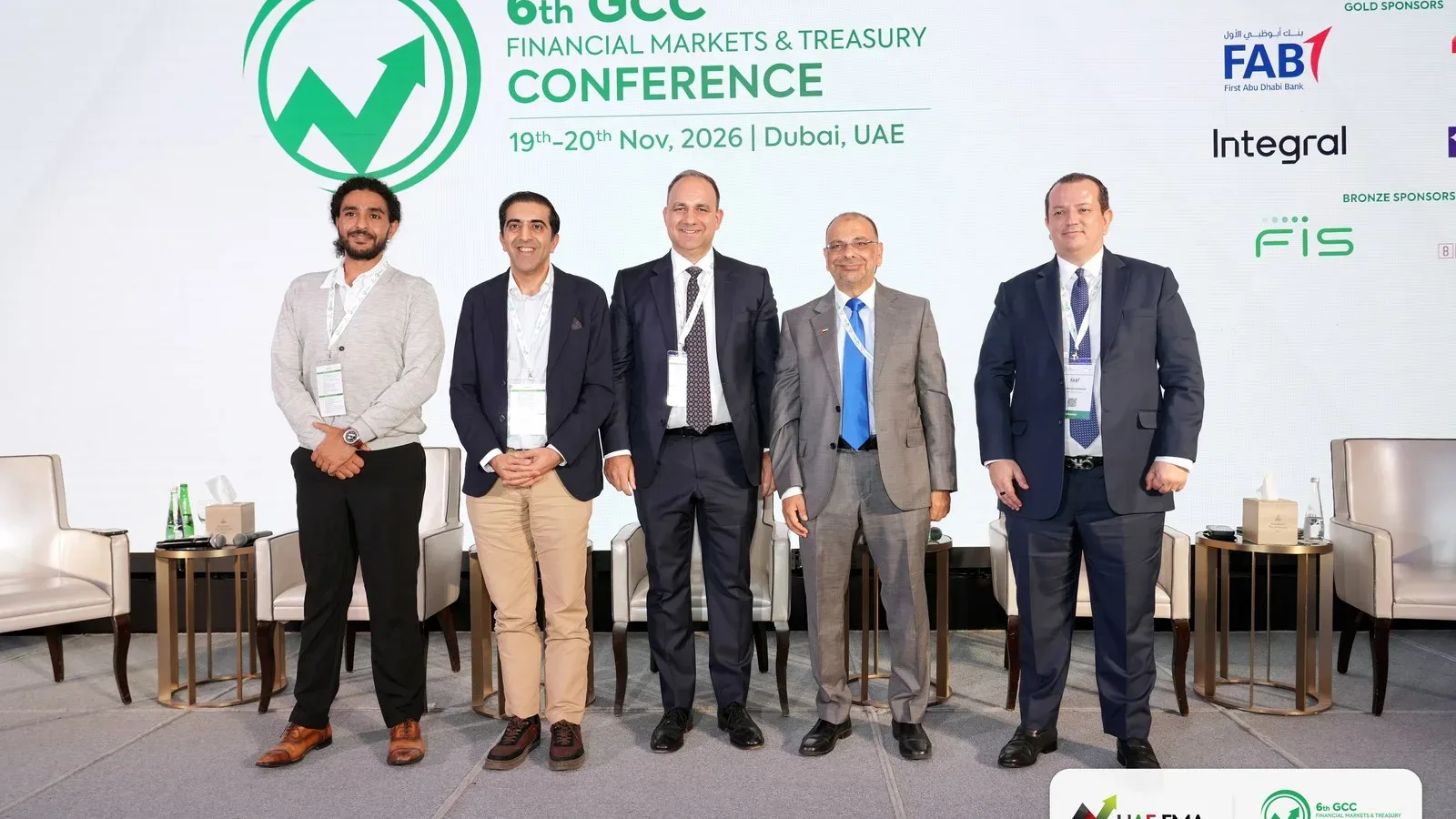
His panel included Hirander Misra, Chairman and CEO of GMEX Group; Dr. Mohamed Damak, Global Head of Islamic Finance at S&P Global Ratings; Adam Popat, CEO of SettleMint; and Mohamed Roushdy, Chief Technology Officer of Reem Bank.
"Just your database technology"
Refaie offered his own framing of tokenization. "Let's not forget that even the banknote in our pockets is a token. It's actually a representation of something," he said. "Even the one dirham, the one dollar, the one pound, it's just a token because it's a piece of paper that just promises you an asset or future returns."

Blockchain, he argued, should be seen as a ledger technology rather than a new financial system. "If you're using blockchain, it's just you're decentralizing your ledger to be tamper-proof," he said, comparing it with banks running on cloud databases. Tokenizing bonds or securities, in that view, means migrating "from one database to the other."
He pointed to UAE property platform SmartCrowd, which he said has fractionalized real estate for about a decade and has looked at moving its platform to blockchain. "He's not trying to create a new market. He has a market already, he has liquidity," Refaie said. "In the end, what matters for the end user is to get the job done."
Neobanks, ratings and the "HyFi" model
Refaie asked Misra to explain GMEX Group's "model of models" and its HyFi (Hybrid Finance) approach, which bridges traditional and digital finance. He asked Damak how S&P looks at digital securities and how a rating agency assesses a neobank built on an underlying bank, and asked Popat about the lifecycle of tokenized real estate.
He put a direct question to Roushdy: "Is a neobank a bank, or is it a SaaS platform that offers banking as a service?" In digital banking, Refaie added, the shift is to "mint" currency digitally rather than print banknotes.
To close, he asked each speaker to link their work to sustainability, including GMEX's initiatives, incentives for environmentally certified real estate projects, and S&P's view of sustainable sukuk and green bonds.
Earlier stories cover each speaker's remarks in full, including Hirander Misra on the HyFi model, Adam Popat on managing the whole asset lifecycle on-chain, Dr. Mohamed Damak on standard sukuk documents and digital sukuk, and Mohamed Roushdy on why digital banks win on the operating model.
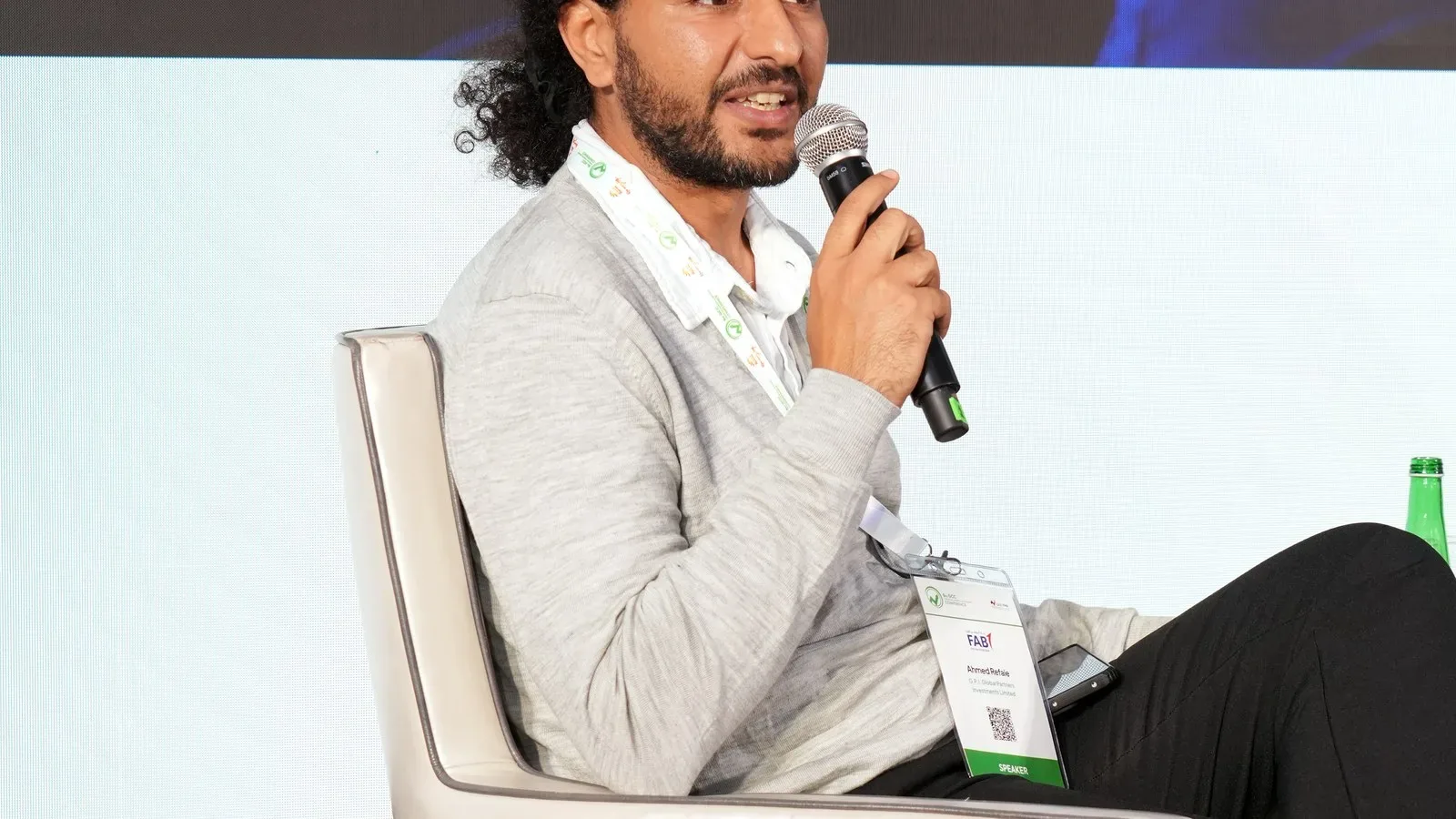
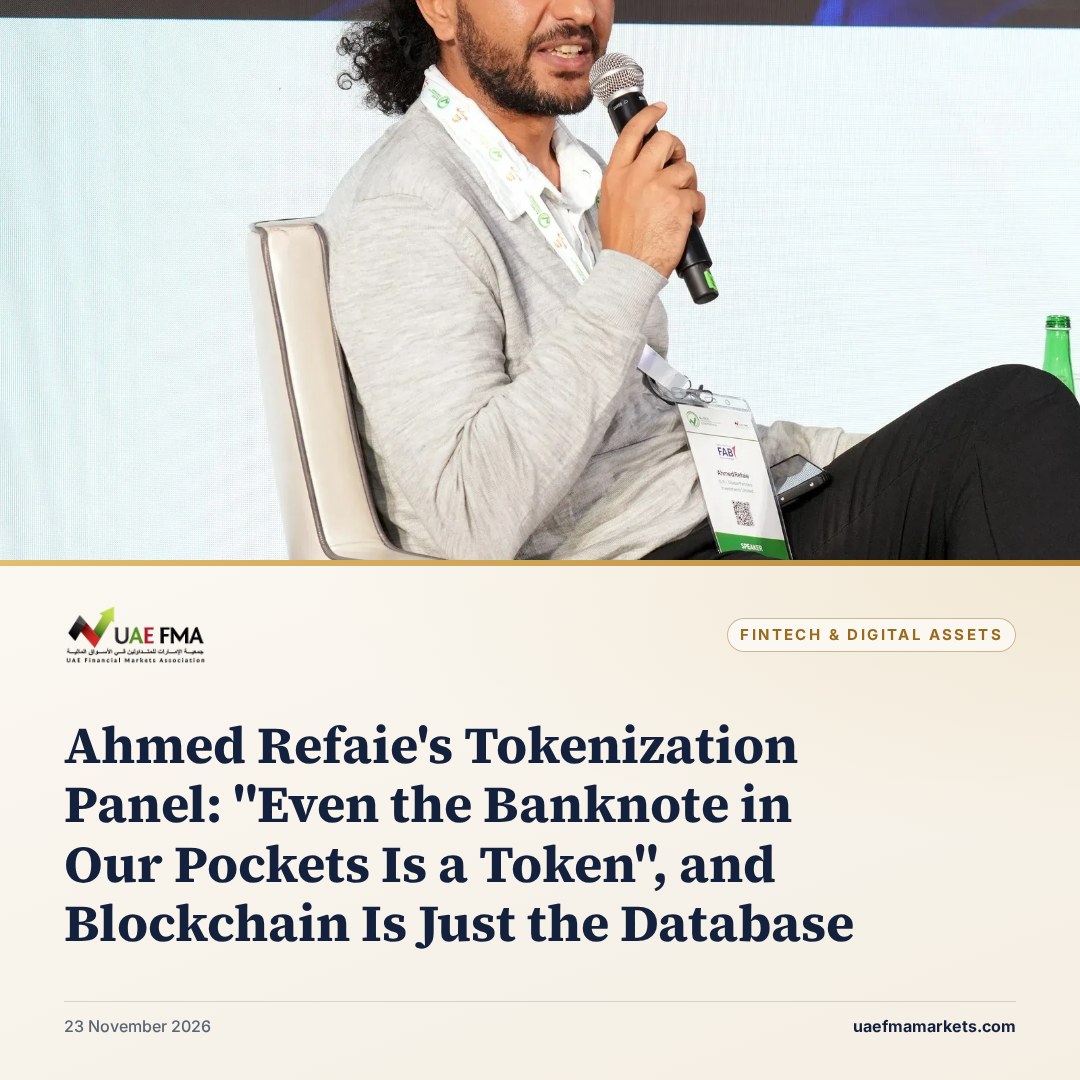
Image: Ahmed Refaie moderates the Digital Assets and Tokenization panel at the 6th GCC Financial Markets and Treasury Conference in Dubai. · Photo: UAEFMA / GCC FMT 2026

The newsroom of UAEFMA Markets, the news service of the UAE Financial Markets Association, covering UAE banking, treasury, capital markets and fintech.
Related stories
View all →
Tradepedia's Avramis Despotis: Autonomous AI Is the Next Revolution for Trading Desks and Treasuries
Revona's Arash Jalali: In AI Trading and Treasury Fintech, Humans Write the Governance